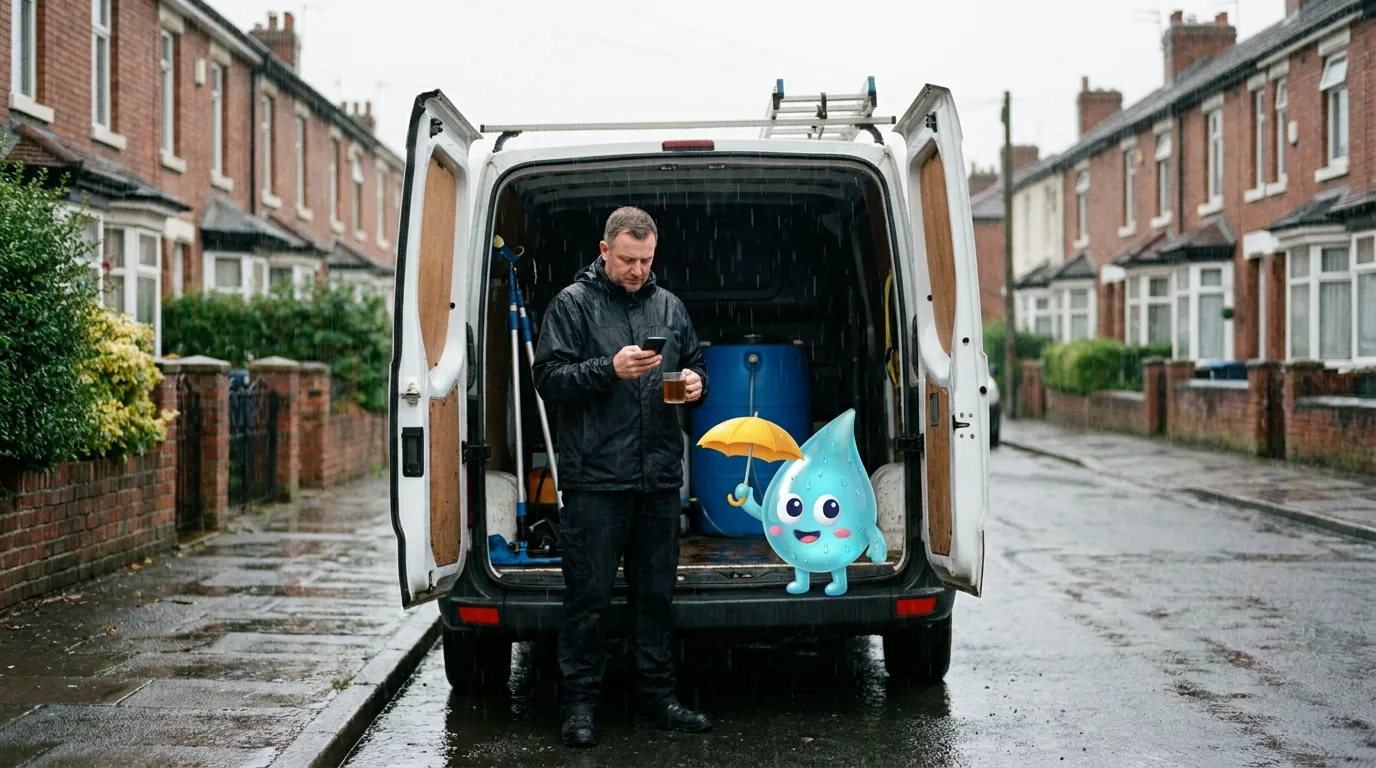
- Light drizzle with a water-fed pole is usually workable. Heavy rain, strong wind and ladders aren’t.
- Make the call the night before, with the forecast against what’s booked.
- Move the visits, don’t drop them, and tell the whole round in one message.
- Only charge for the cleans you’ve actually done.
If you clean windows in this country, rain isn’t a surprise. It’s part of the job. What makes or breaks a wet week isn’t the weather, it’s how quickly you can move the round and let people know.
Should you clean windows in the rain?
Sometimes, yes. With a water-fed pole and pure water, light drizzle doesn’t spoil the glass the way most people think. It’s the dirt in the water that leaves marks, and rain on clean glass dries off clean.
Heavy rain is a different story, and so is strong wind. Anything on ladders, I call it straight away. A slippy rung isn’t worth it.
Then there’s the customer. Even when the glass comes up fine, someone watching you clean in a downpour can feel they’re paying for nothing. Sometimes the right call is the one that looks right.
Make the call the night before
The worst rain days are the ones that catch you at eight in the morning with a van full of kit. Look at the week ahead against what’s booked, every evening, and decide before you go to bed.
In Zifty the forecast sits on top of the work planner, and Zif flags a wet day with jobs on it, so I can sort it the evening before instead of in the rain.
Move the work, don’t drop it
The jobs that go missing are the ones you just skip. Do that a couple of times and a customer goes three months between cleans, and that’s when they start looking for someone else.
So a rained-off job always gets moved, never skipped. Depending on the week, I’ll:
- push the whole day back to the next dry one,
- squeeze the jobs into the dry days left on the same round, or
- fold them into the next visit if it’s only a few days away, and tell the customer.
Move a visit in Zifty and the planner shuffles the rest of the week round it, so nobody quietly drops off the round. There’s more on how that works in round planning.
Tell customers in one go
Customers don’t mind rain. They mind not knowing. One short message to everyone on that round does the job:
Hi, we’re rained off today so we’ll be with you on Friday instead. Nothing you need to do. Thanks!
In Zifty I pick the round, write it once or use a template, and it goes to everyone on it. It takes a couple of minutes, not an evening of texts.
Don’t charge for rain
This one matters more than anything else on the list. If a customer pays a fixed amount on a fixed date, a rained-off month means they’ve paid for a clean that never happened. That’s how you lose trust.
On our round, customers only pay for cleans we’ve done. Direct Debit is how they pay, but the payment comes when the job’s done. Rained off means nobody pays. Lewis explains how that works in No job, no charge.
A wet-week checklist
- Check the forecast against booked work every evening.
- Make the call the night before, not on the doorstep.
- Move visits, never skip them.
- One message to each round that’s affected.
- Only charge for cleans you’ve done.
- Win the time back with a longer dry day or a Saturday morning if you need to.

Plan your window cleaning round in the quickest order. Work planner, today’s round, a map of every customer and one-tap route optimising.
See how it works →